Source Eco Friendly Corrugated Ripple Paper Cup for Beverage, Coffee, and Tea
Find 30 verified options for eco friendly corrugated ripple paper cup designed for hot cups, cold cups, and tea cups. Compare specifications, customization, and pricing from suppliers in China with ISO and FDA standards.
Key considerations
Products List



Comprehensive Sourcing Guide
Strategic Sourcing Guide for Eco-Friendly Corrugated Ripple Paper Cups
Understanding Product Specifications and Material Composition
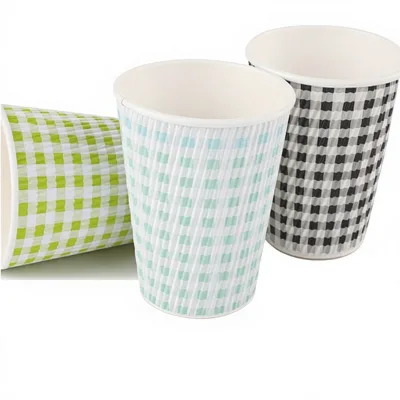
When sourcing eco-friendly corrugated ripple paper cups, buyers must first establish a clear understanding of the technical specifications that define the product's utility and environmental profile. The core material for these cups is consistently identified as paper, specifically utilizing a PE (Polyethylene) coated paper construction. This coating is critical for functionality, as it provides the necessary liquid barrier to hold hot and cold beverages without compromising the structural integrity of the paper substrate. The corrugated or ripple design is not merely aesthetic; it serves a functional purpose by creating an air gap that insulates the hand from the temperature of the liquid, making it suitable for both hot and cold applications.
The market offers a diverse range of capacities to meet various operational needs. Specifications indicate that models are available in sizes ranging from 4 ounces up to 26 ounces, with specific common configurations including 8oz, 10oz, 12oz, 16oz, and 20oz. Some product lines extend this range further, offering capacities from 1oz to 26oz, while others focus on specific metric equivalents like 65ml, 110ml, and 135ml. This variability allows procurement teams to select the exact volume required for their specific beverage service, whether for single-serve espresso, standard coffee, or large iced tea servings. The physical dimensions are often standardized, with a typical gross weight for a single product unit noted around 6.500 Kg, though this figure likely represents a bulk carton weight rather than a single cup, necessitating clarification during the supplier inquiry phase.
The manufacturing process for these cups typically involves flexographic printing, with some suppliers also offering offset printing capabilities. This allows for high-quality, multi-color branding directly on the cup surface. The cups are generally supplied in an unfolded state, requiring the buyer to have the appropriate machinery for assembly or to purchase pre-formed units. The style is predominantly simple, focusing on functionality and the natural aesthetic of the paper material. Customization is a key feature, with options available for logo placement and specific design requirements, ensuring that the final product aligns with brand identity while maintaining the eco-friendly narrative.
Compliance, Certification, and Regulatory Standards
Navigating the regulatory landscape is paramount when sourcing eco-friendly products, particularly those intended for food and beverage contact. The supplied data indicates a robust set of standards and certifications that buyers should verify to ensure compliance with international safety and environmental regulations. The product attributes list several critical standards, including ISO 9001, SGS, EU regulations, CIQ, LFGB, CE, ES, GSV, and FDA. These certifications cover various aspects of quality management, food safety, and environmental impact.
For eco-friendly claims to be credible, the presence of FDA approval is essential, as it confirms the material's safety for food contact in the United States market. Similarly, LFGB (German Food and Feed Code) and EU standards are crucial for European markets, ensuring the product meets strict chemical migration limits. The FSC (Forest Stewardship Council) certification is frequently mentioned in the context of paper products, serving as a verification that the paper pulp is sourced from responsibly managed forests. While the provided text lists FSC as a standard, buyers must request current, valid certificates from the supplier, as certification status can change and should not be assumed without documentation.
Additionally, the product is described as having "Eco-Friendly" and "Biodegradable" features. However, these are observations rather than guaranteed claims for every listed item. Buyers must verify the specific biodegradability claims against recognized standards such as EN 13432 or ASTM D6400, which define the conditions under which a material will break down. The supply chain also adheres to GSV (Global Social Value) and CE marks, indicating adherence to social responsibility and European conformity standards, respectively. It is imperative for procurement teams to audit these certifications annually, as reliance on outdated or generic claims can lead to compliance failures in the destination market.
Cost Drivers and Procurement Economics
The economics of sourcing corrugated ripple paper cups are influenced by several distinct factors, primarily driven by order volume, customization requirements, and logistical considerations. The Minimum Order Quantity (MOQ) is a significant cost driver, with observed ranges spanning from 500 to 100,000 units. Specific product listings indicate an MOQ of 50,000 pieces, which suggests that smaller buyers may face higher per-unit costs or need to consolidate orders with other suppliers to meet volume thresholds. The price range observed in the market is notably low, between 0 and 1 USD, but this figure likely represents the unit cost for bulk orders and should be treated as a baseline rather than a fixed price for all scenarios.
Payment terms play a crucial role in the financial planning of the procurement process. Standard terms observed include a 30% deposit followed by a 70% balance payment. This structure requires buyers to manage cash flow effectively, ensuring that the initial deposit is allocated without straining working capital. The total cost is also affected by the packaging method. The cups are typically packed in cartons, with specific dimensions like 43.54032 cm noted for shipping efficiency. Some listings mention a packing density of 1,000 pieces per carton, while others specify 25 pieces per bag and 20 bags per carton. These variations impact the volumetric weight of the shipment, directly influencing freight costs.
Customization is another variable that impacts pricing. While the product supports custom logos and designs, the complexity of the printing process (flexographic vs. offset) and the number of colors used can increase the unit cost. Buyers should anticipate that multi-color printing and complex logo placements will incur higher setup fees and per-unit charges compared to standard, unbranded units. Furthermore, the origin of the product, primarily China with specific mentions of Anhui as a production hub, affects shipping lead times and logistics costs. Buyers must factor in the distance from the manufacturing site to their distribution centers when calculating the total landed cost.
Typical Applications and Usage Scenarios
The versatility of eco-friendly corrugated ripple paper cups makes them suitable for a wide array of applications across the food and beverage industry. The primary usage categories include hot cups, cold cups, tea cups, drinking cups, and jelly cups. This broad applicability allows businesses to utilize a single product line for multiple menu items, streamlining inventory management. The cups are specifically designed for food packaging, pharmaceutical packaging, and gift packaging, indicating their adaptability beyond standard beverage service.
In the beverage sector, these cups are ideal for coffee shops, tea houses, and water stations. The insulation provided by the corrugated structure makes them particularly effective for hot coffee and tea, protecting the consumer's hand from heat. Conversely, the same structure provides a barrier against condensation for cold beverages, preventing the cup from becoming slippery or soggy. The "Universal Packaging" designation suggests that these cups can be used in various retail environments, from quick-service restaurants to high-end cafes.
The pharmaceutical and gift packaging applications highlight the cup's potential for secondary uses. In the pharmaceutical context, the cups may be used for dispensing liquids or as part of a sterile packaging solution, provided the FDA and relevant health standards are met. For gift packaging, the eco-friendly nature of the product adds value to the brand story, appealing to environmentally conscious consumers. The "Simple" style of the cup ensures that it does not distract from the product it holds, making it a neutral vessel that can be branded to fit any aesthetic.
Supplier Evaluation and Selection Criteria
Selecting the right supplier requires a rigorous evaluation process that goes beyond price comparisons. Buyers should prioritize suppliers who demonstrate transparency in their production capabilities and compliance with international standards. The presence of OEM (Original Equipment Manufacturer) and ODM (Original Design Manufacturer) services is a strong indicator of a supplier's flexibility and ability to meet specific customization needs. Suppliers that accept custom logos and offer sample units for free allow buyers to test product quality before committing to large orders.
Geographic location is another critical factor. The primary origin for these products is China, with specific production hubs in Anhui. Buyers should verify the supplier's location to assess logistics efficiency and potential risks associated with shipping from that region. A supplier located in a major manufacturing hub may offer better economies of scale, but buyers must also consider the lead times associated with international shipping. The observed lead times and production capacity should be clearly defined in the contract to avoid delays in the supply chain.
Quality control capabilities are essential for maintaining product consistency. Buyers should inquire about the supplier's internal quality assurance processes, including how they handle defects and ensure that the PE coating is applied uniformly. The ability to provide test results and certification documents is a key differentiator. Suppliers who are willing to share their ISO 9001, SGS, and FDA certification records demonstrate a commitment to quality and regulatory compliance. Additionally, the supplier's responsiveness to inquiries and their ability to provide detailed product specifications, such as the exact model numbers (e.g., FBL, YHXMQ032), are indicators of their professionalism and reliability.
Quality Control and Long-Term Procurement Strategy
Implementing a robust quality control (QC) strategy is vital for ensuring that the sourced cups meet the required standards for performance and safety. Buyers should establish clear acceptance criteria for the cups, focusing on key attributes such as the integrity of the PE coating, the quality of the printing, and the structural strength of the corrugated layer. Regular inspections, either through third-party agencies or internal teams, should be conducted at the supplier's facility before shipment. This includes checking for defects in the folding process, ensuring that the cups are properly sealed, and verifying that the printed logos are aligned and free of smudges.
Long-term procurement considerations involve building a sustainable relationship with suppliers that can adapt to changing market demands. As environmental regulations evolve, buyers must ensure that their suppliers remain compliant with new standards. This requires ongoing communication and a willingness to invest in research and development for more sustainable materials. The "Eco-Friendly" and "Biodegradable" claims should be continuously validated against emerging standards to maintain the product's market appeal.
Furthermore, buyers should consider the scalability of their supply chain. As demand for eco-friendly products grows, the ability to increase order volumes without compromising quality or lead times is crucial. Establishing a partnership with a supplier who has the capacity to handle large orders, such as the 50,000-piece MOQ observed, ensures that the business can meet market demand efficiently. Finally, maintaining a diverse supplier base can mitigate risks associated with supply chain disruptions, ensuring that the business remains resilient in the face of external challenges. By focusing on these strategic elements, buyers can secure a reliable supply of high-quality, eco-friendly corrugated ripple paper cups that align with their brand values and operational needs.
FAQs
What materials are used for eco friendly corrugated ripple paper cups?
These cups are constructed from PE coated paper to ensure liquid barrier and structural integrity. The corrugated design provides insulation for hot and cold beverages while maintaining an eco-friendly profile suitable for food contact.
Which certifications verify safety for food and beverage contact?
Products typically meet FDA, SGS, LFGB, and ISO 9001 standards to ensure safety for food and drink applications. Buyers should verify current certificates for EU regulations and FSC to confirm responsible sourcing and chemical migration limits.
Can suppliers provide custom logos and designs on the cups?
Yes, customization is available for logos and specific design requirements using flexographic or offset printing. Buyers can request multi-color printing to align with brand identity while maintaining the simple style of the product.
What is the minimum order quantity for bulk purchasing?
The minimum order quantity ranges from 500 to 100,000 pieces depending on the specific supplier and product line. Some listings specify an MOQ of 50,000 pieces, requiring buyers to consolidate orders to meet volume thresholds.
How are the cups packaged for seaworthy shipping?
Cups are packed in cartons with dimensions like 43.5 by 40 by 32 cm for efficient shipping. Packaging density varies, with options including 1,000 pieces per carton or 25 pieces per bag with 20 bags per carton.
What capacity sizes are available for these paper cups?
Available capacities range from 4 ounces up to 26 ounces, including specific models like 8oz, 10oz, and 16oz. Some product lines offer metric equivalents such as 65ml, 110ml, and 135ml for diverse beverage service needs.